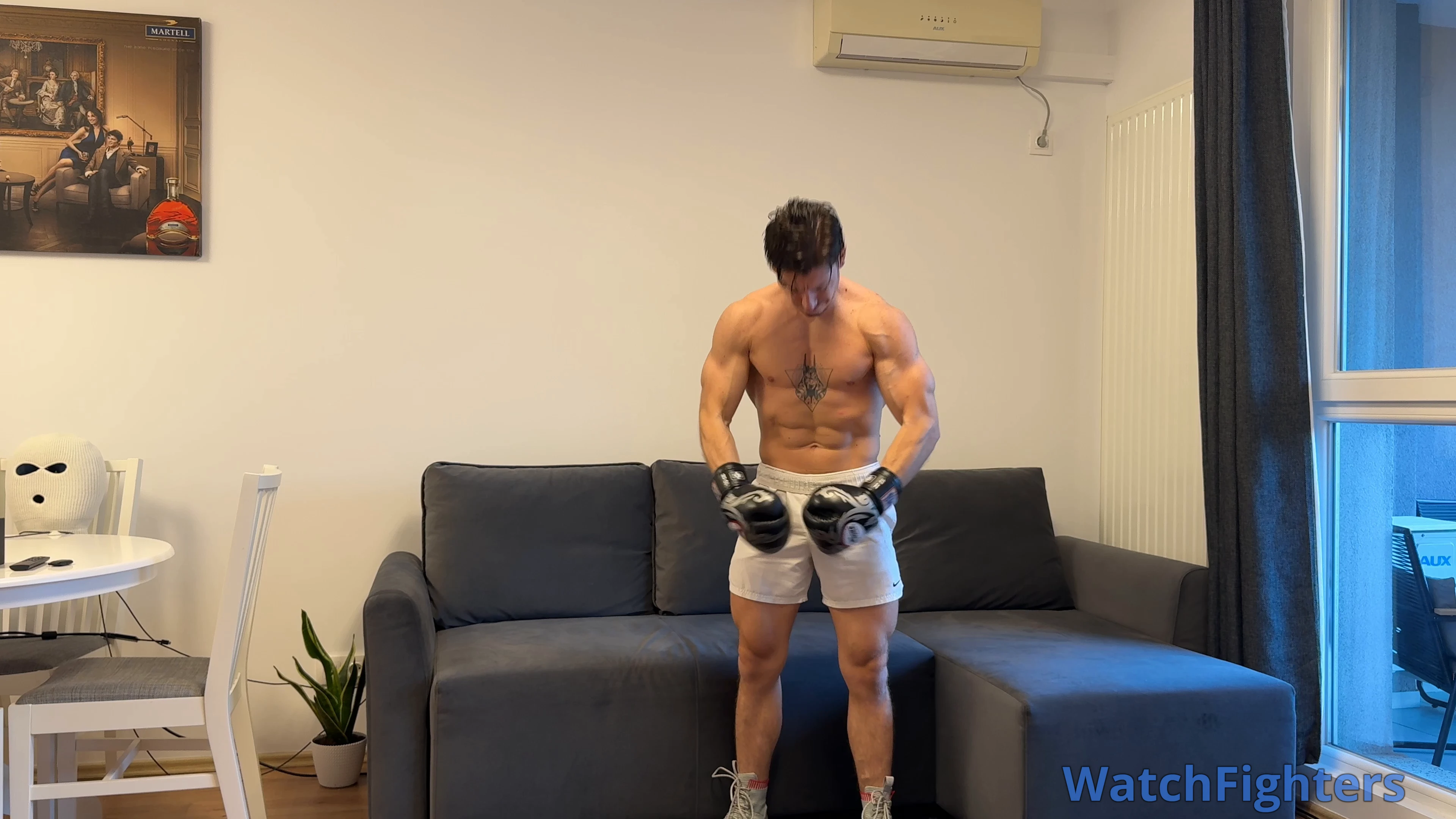
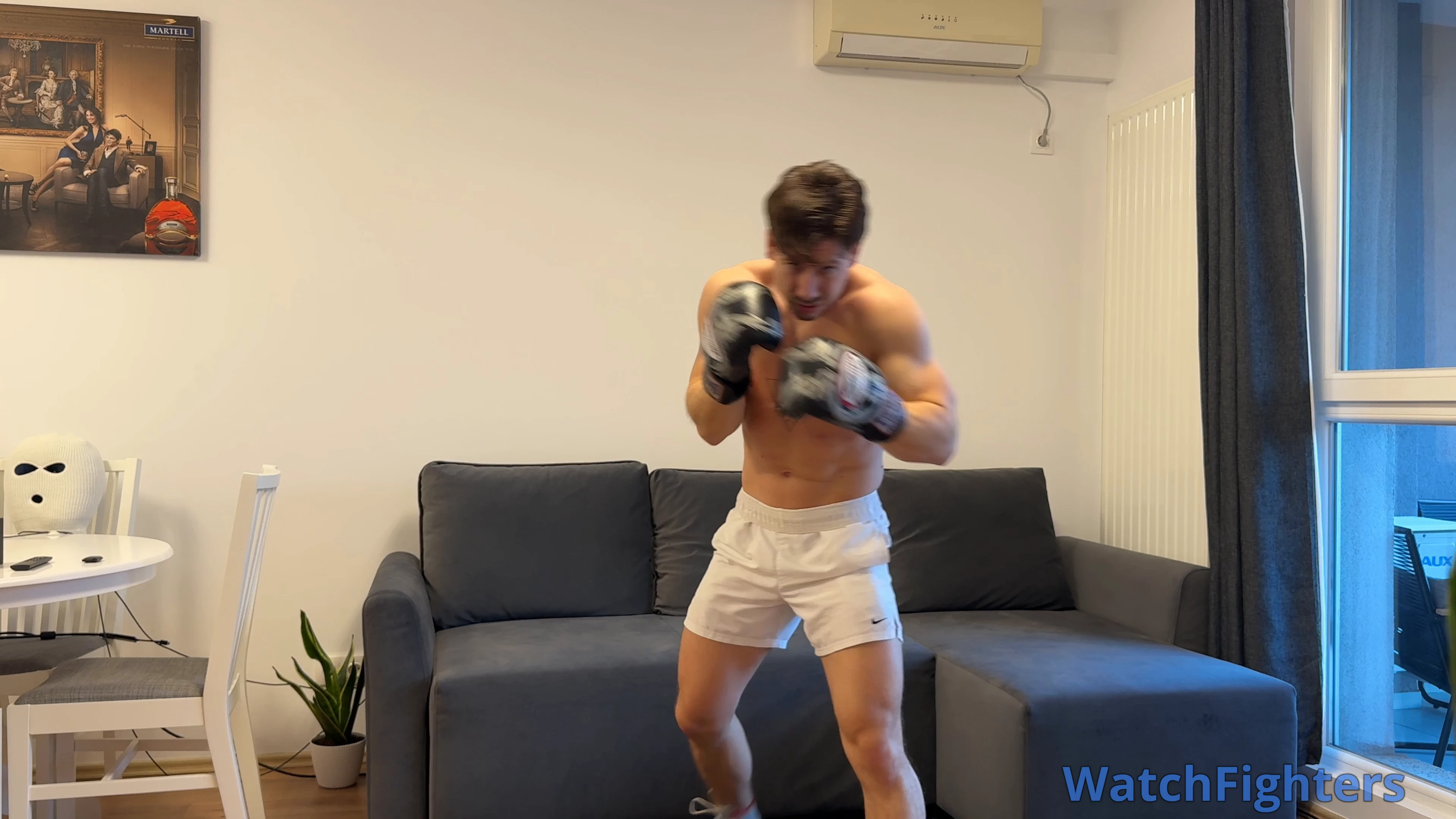
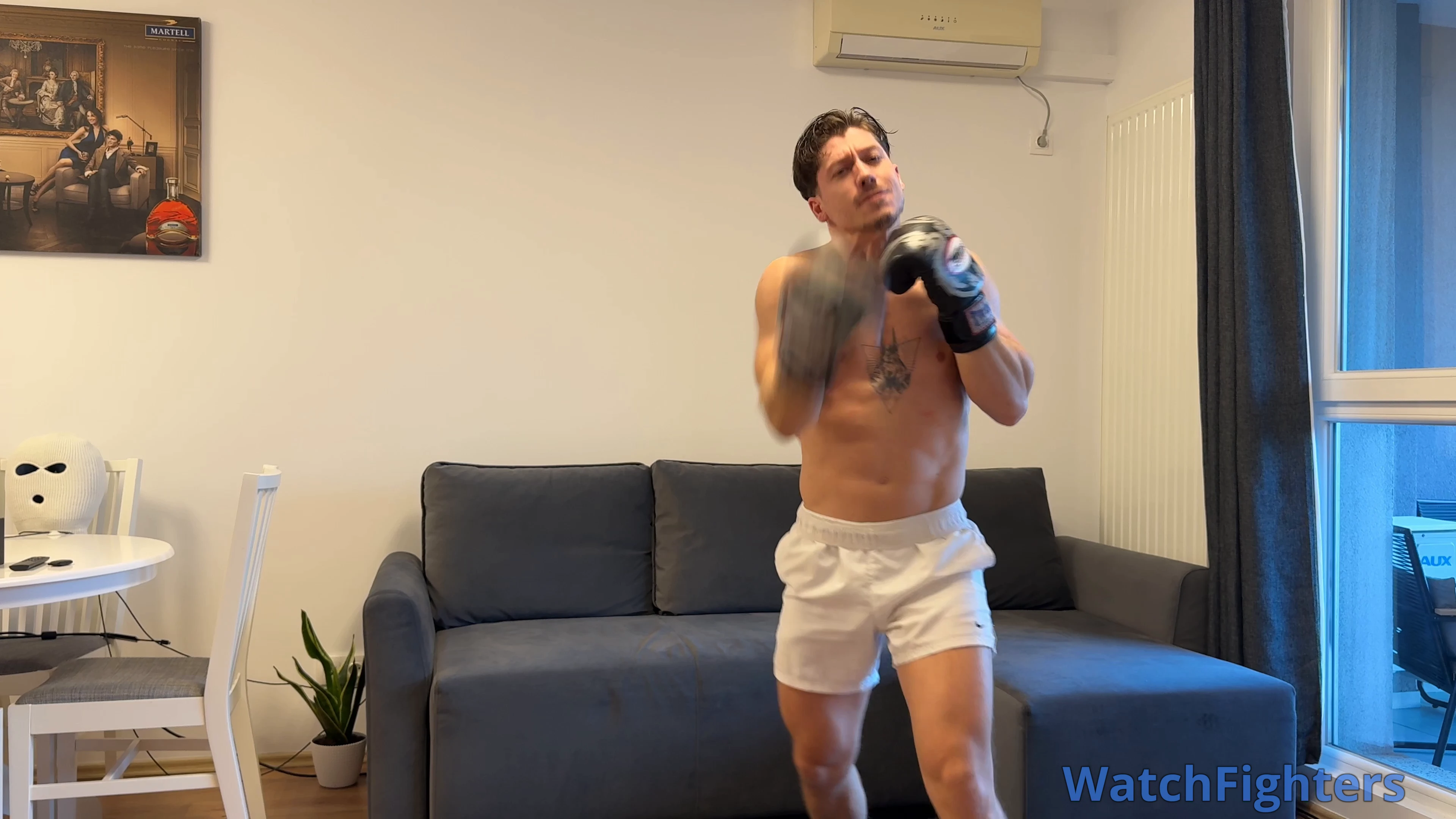
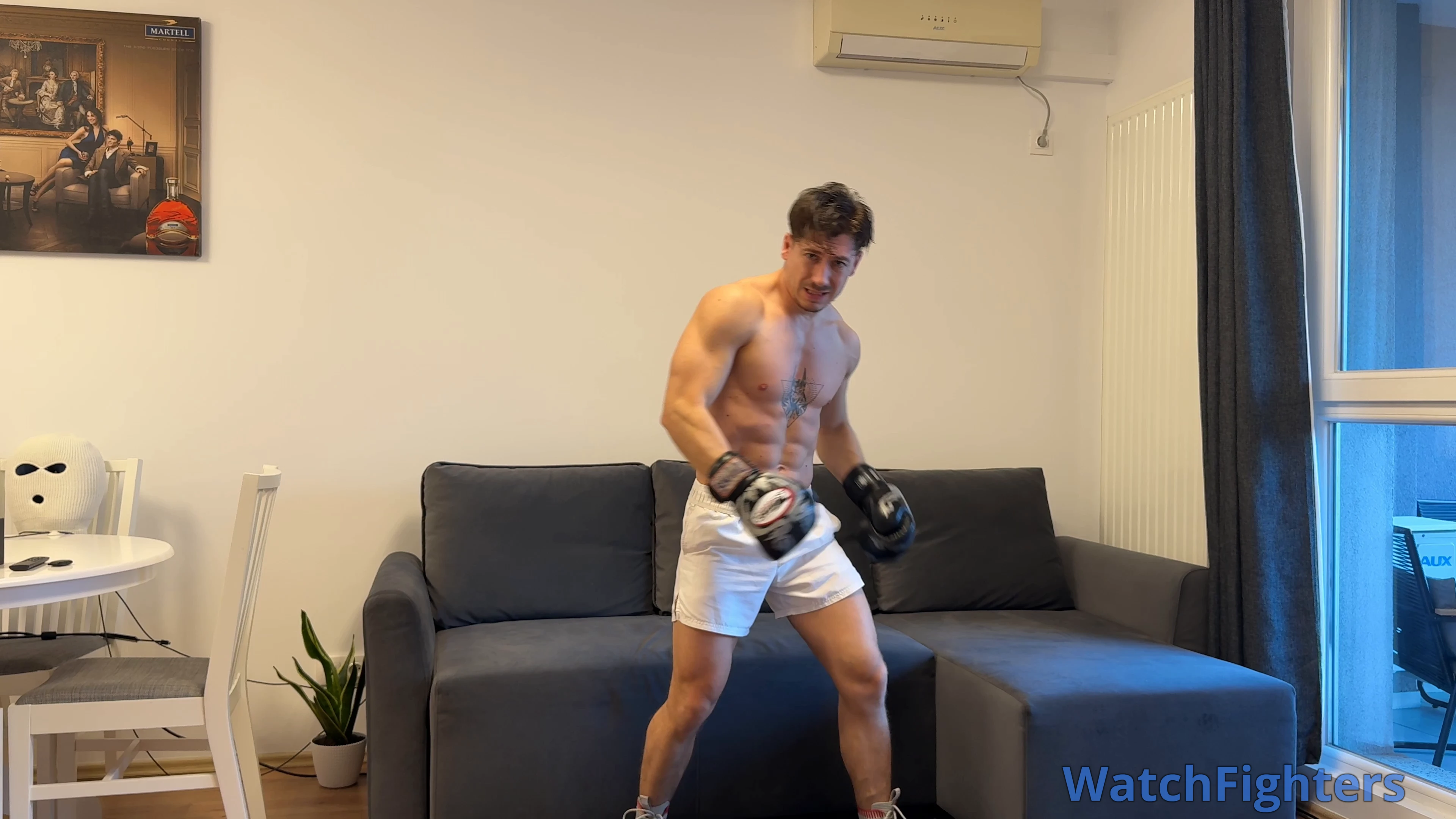
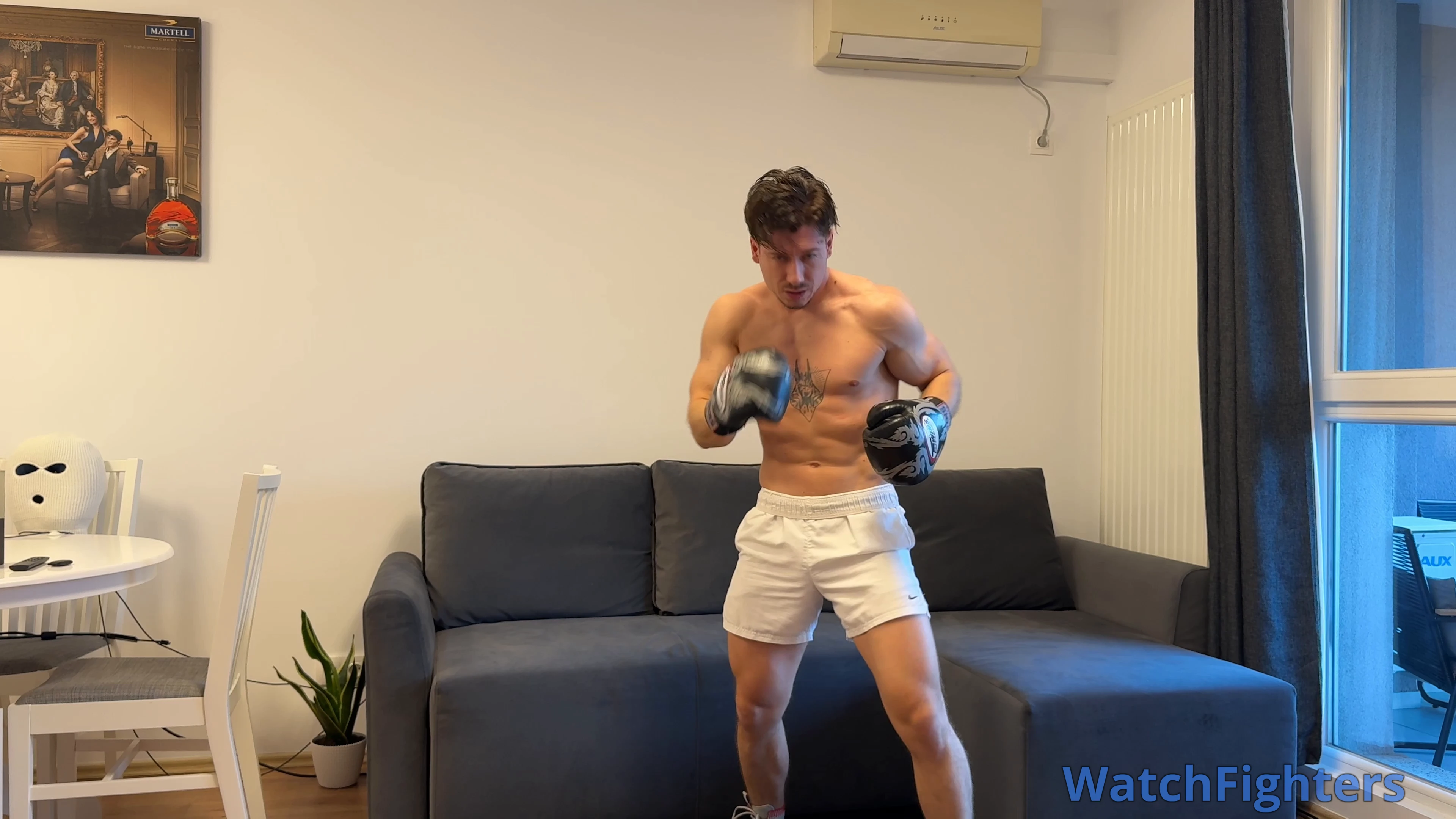
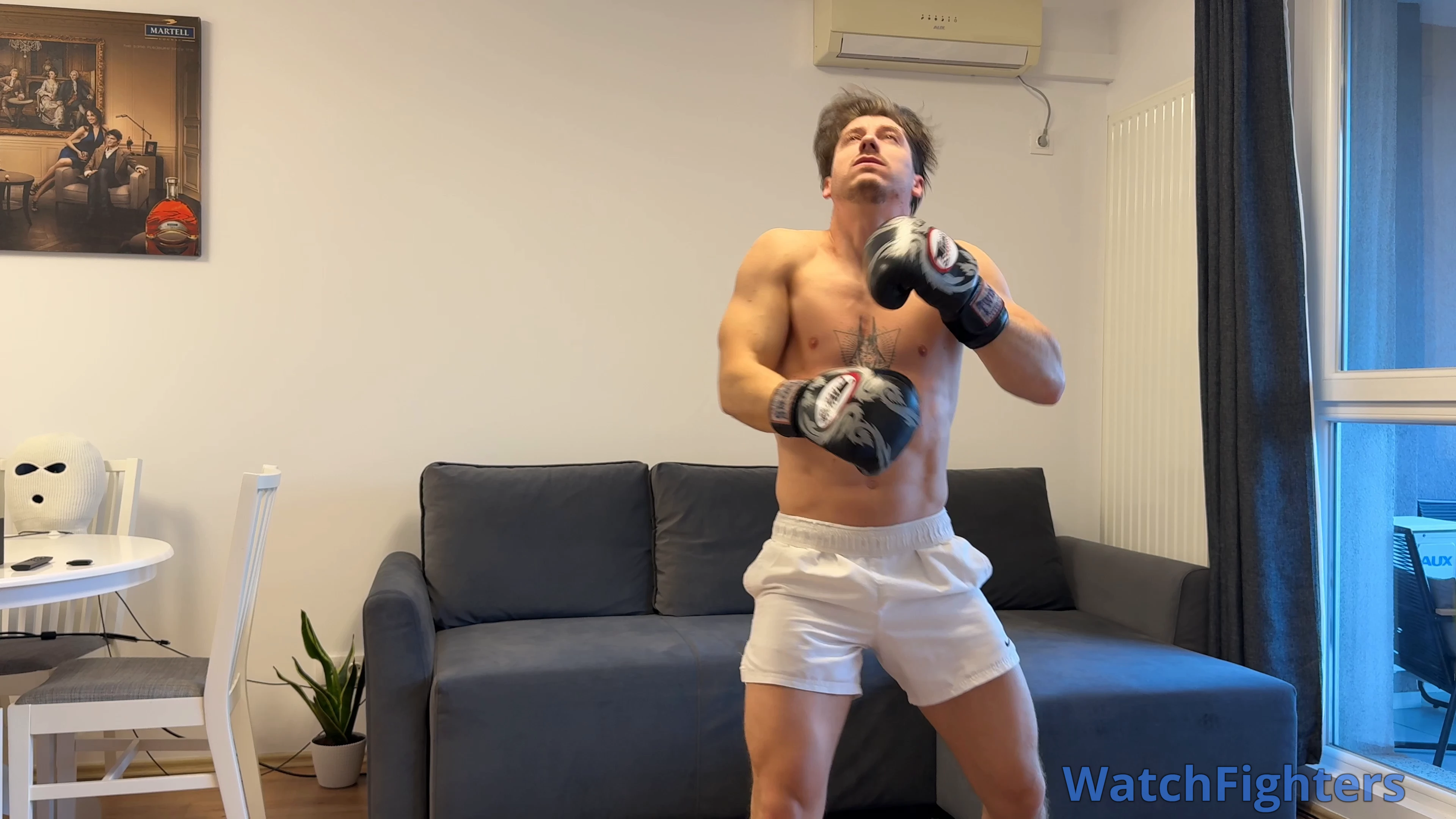
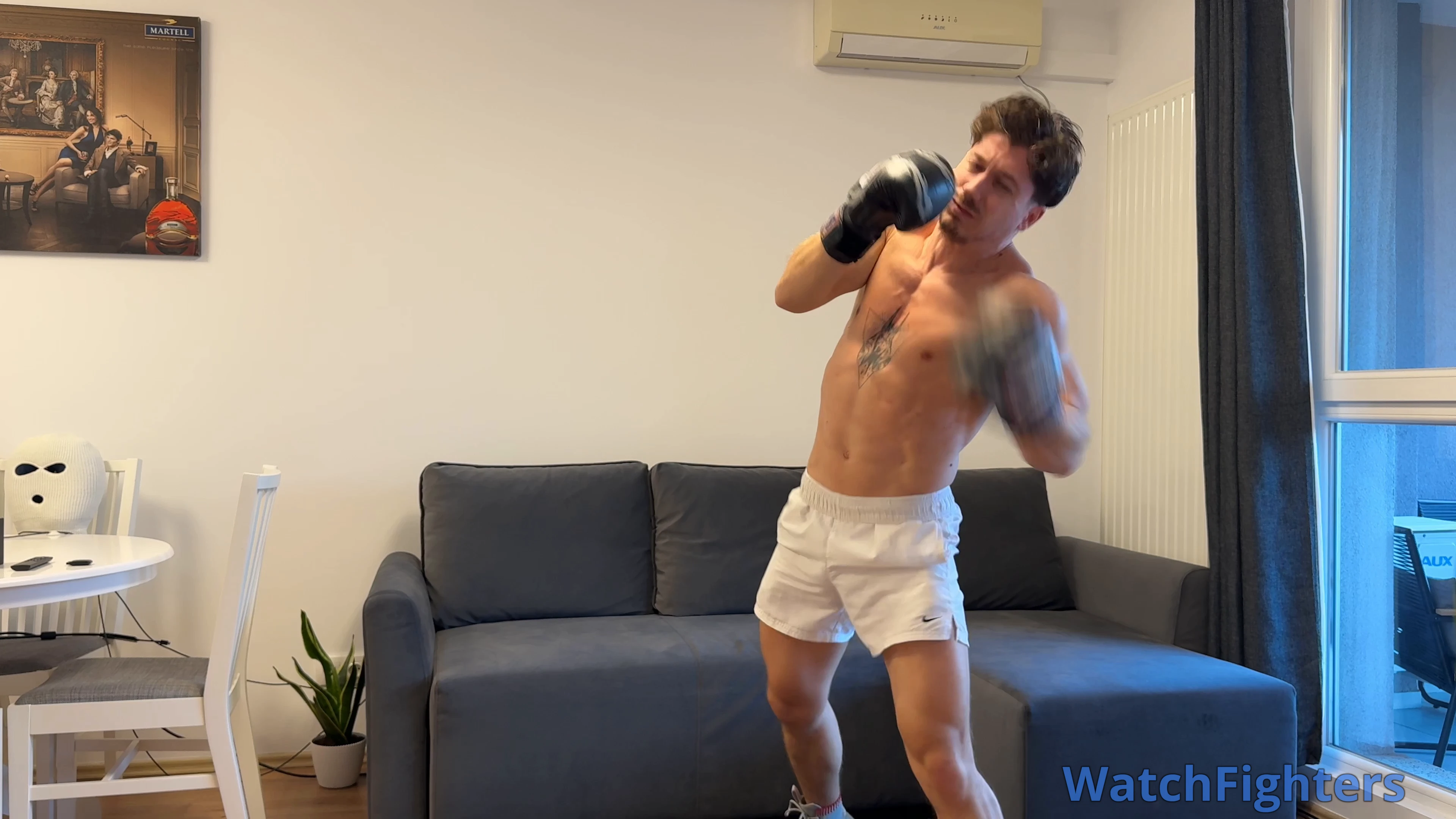
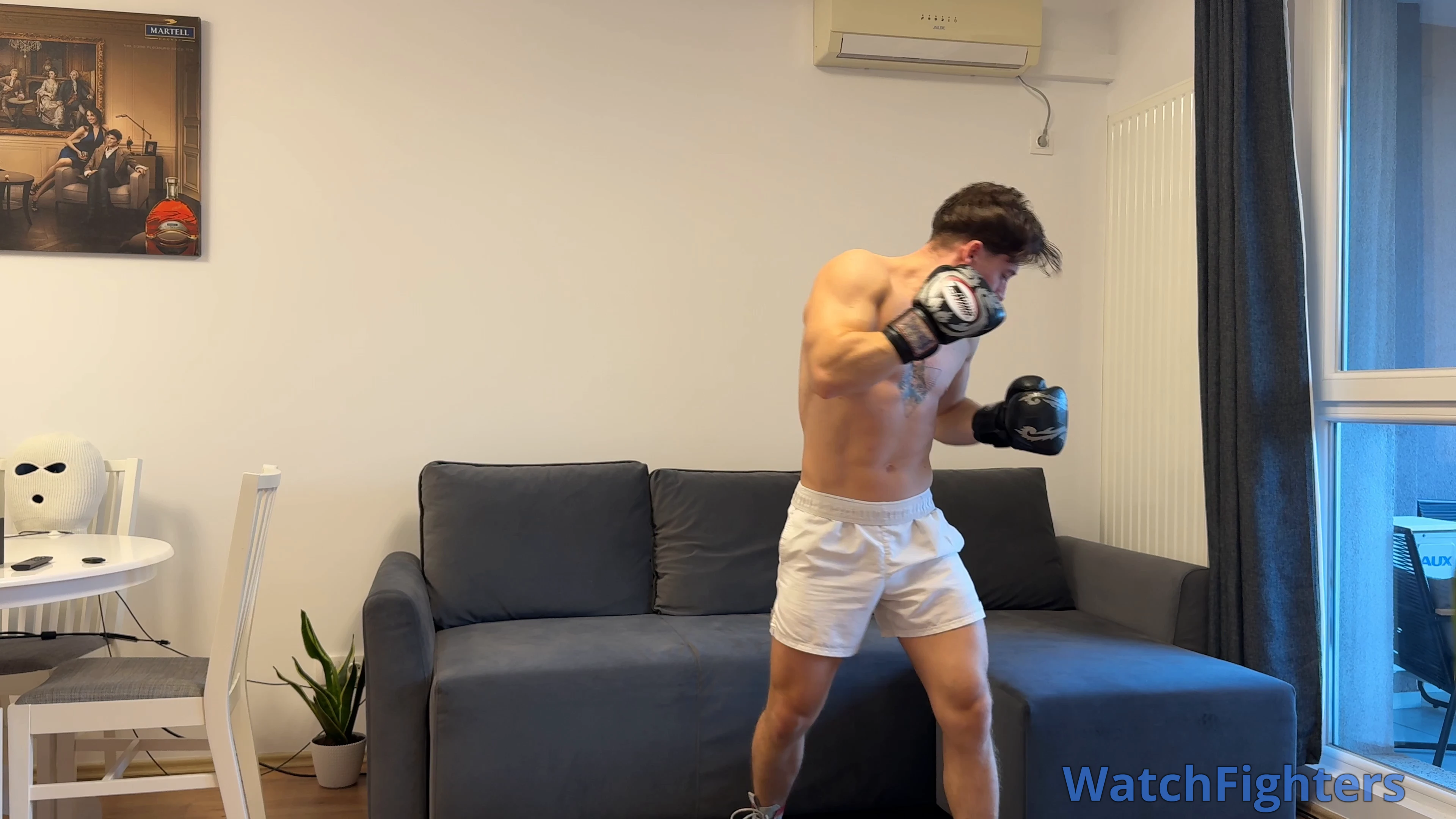
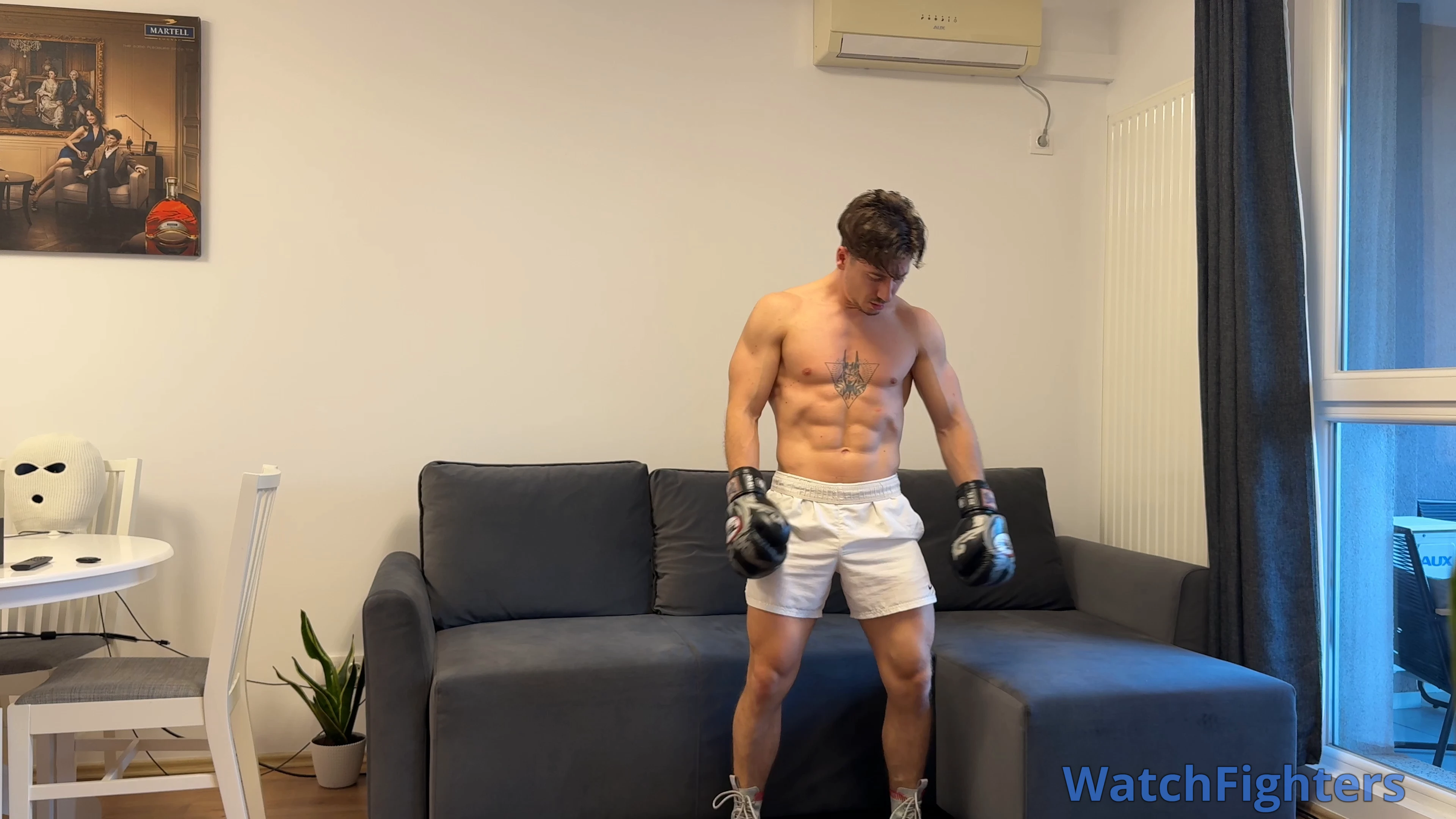
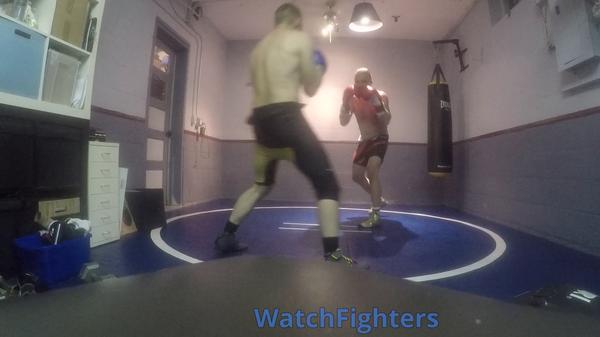
You step into the ring across from your opponent as the bell rings. From the opening moments, you set the pace. You pressure forward, breaking through his defense with steady body shots and sharp hooks upstairs. Each punch takes more out of him—his abs tighten, his posture folds, his head snaps with every clean hook. Round by round, you can see the fatigue building.
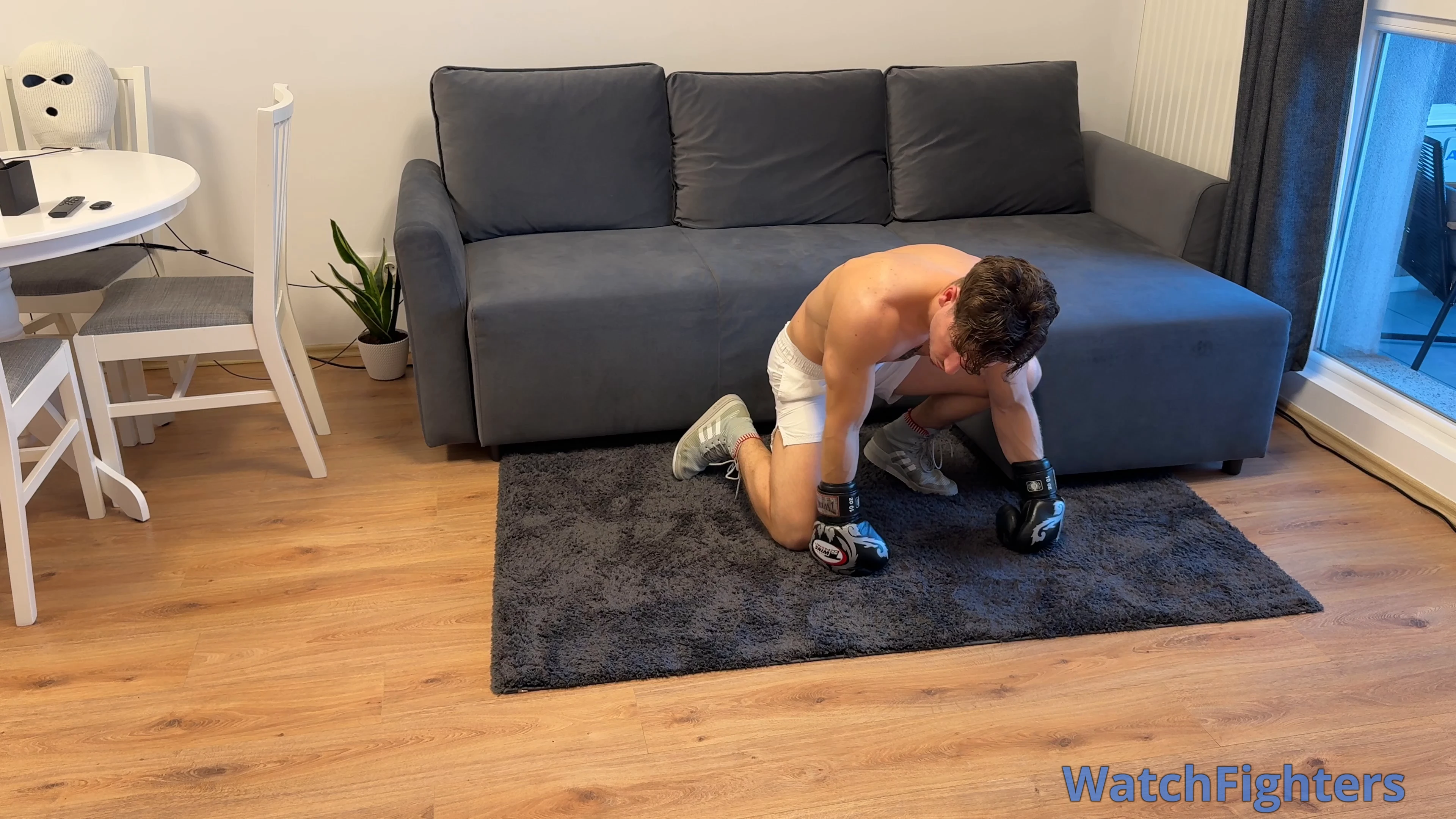
Midway through the fight, you turn up the pressure. Repeated shots to the body slow him down, hooks leave him off balance, and when you drive an uppercut through his guard, his knees hit the canvas first. He hesitates there for a second, then spills forward, flat on the mat for the first knockout.
After that, the fight shifts. He’s no longer fighting back. You move him where you want—standing or kneeling—and focus purely on breaking him down. Body shots drain what little strength he has left, and every punch to the face leaves him more unsteady.
You trap him near the corner and unload to the body until his legs give out. He drops to his knees, still taking punches, before a final uppercut sends him down again—knees first, then fully collapsed.
Dazed and barely aware, he struggles to stand once more. His guard hangs low, his legs shake, and your punches land clean and often. Another combination puts him back on his knees, then down for yet another knockout.
In the end, he’s completely spent—kneeling or barely standing, no resistance left. He admits he’s done. You deliver the final uppercut, and his knees slam into the canvas before his body crumples and stays there. He doesn’t get up. The fight is over, and you’ve finished it. You're the champion now.